
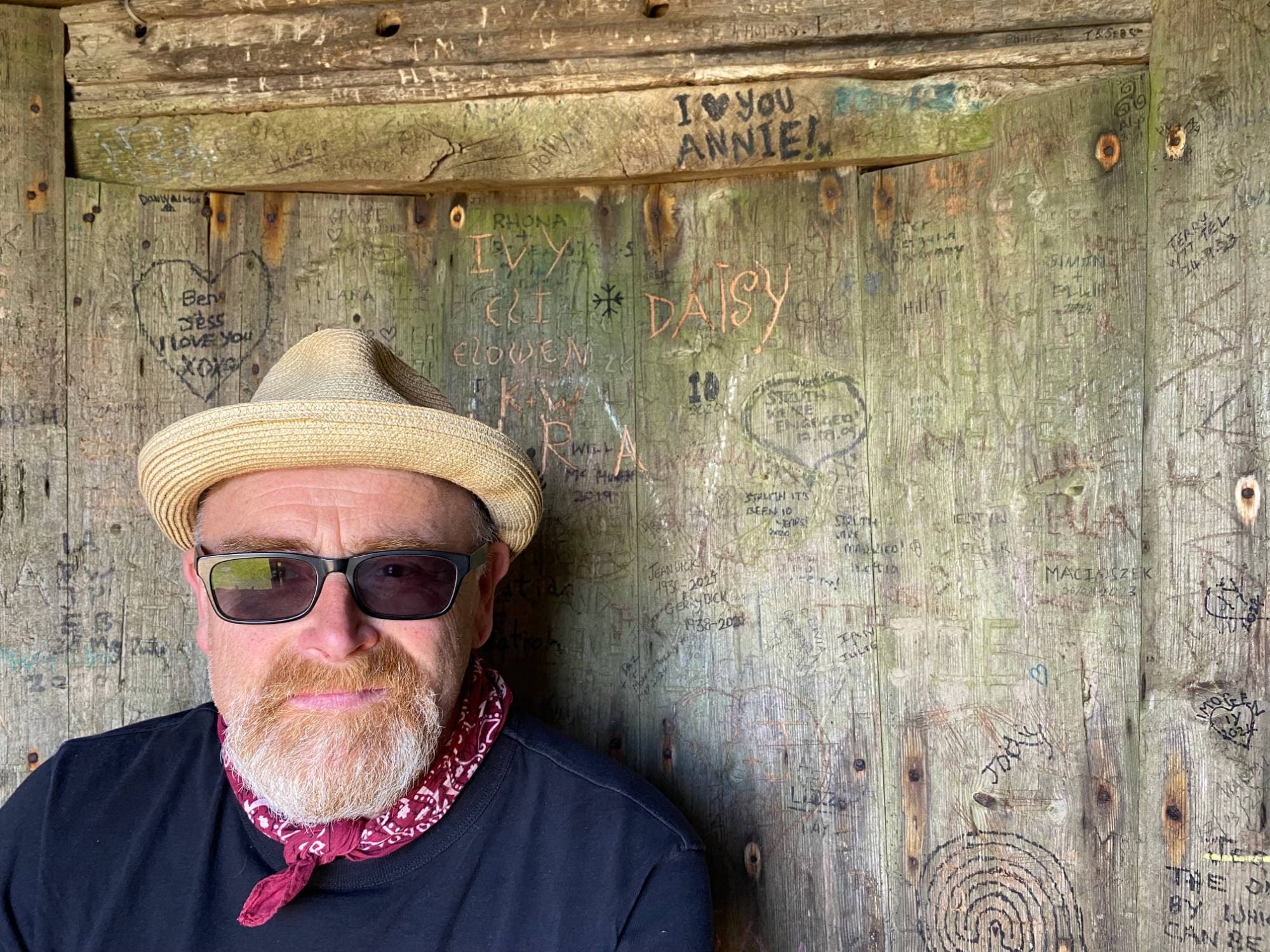
About Vic Llewellyn
Vic Llewellyn
Previously located in Bristol, Vic Llewellyn has been a resident of Wiveliscombe, Somerset for six years. He has been making theatre for over 30 years, both internationally, and nationally.
This has been with companies, such as English National Opera, The Metropolitan Opera, New York, The Kirk Douglas Theatre, Los Angeles, Improbable Theatre, Tim Crouch, Bristol Old Vic, Little Bulb Theatre Company, Shakespeare at the Tobacco Factory, to name a few. His third solo show, No One is Listening (a Ghost story) has just finished a short tour of the South West. His first being Edinburgh hit The Castle Builder (with Kid Carpet), and A Little Death (produced by Bristol Old Vic). Vic was a lead puppeteer in Phelim McDermott/Philip Glass’s Tao of Glass at Soho Place in summer 2026.
He has also performed at The Edinburgh International Festival, Just for Laughs (Montreal), Melbourne Comedy Festival (Australia), Oerol Festival (Netherlands), and Charleville-Mezieres world puppetry festival (France). Vic is working on a book about London street theatre.
In Conversation
Gentle November (Road Song Books)
- VLFirst off... congratulations on bringing out Gentle November. This is the second in a series that Road Song books is publishing. Is that right? And there’s a third coming out soon, I believe.
- AERThank you, Vic. Gentle November is our second publication since we officially launched last June (2025). And it is also the second in a loose triptych where each book contains a story set against the backdrop of nature and wilderness. The first release was Coldwell, a novel by Beverley-based author David Gladwin, and it’s situated in the wilds of the Peak District in the 17-century plague village of Eyam. Gentle November is set in the desert wastes of Namibia, and the next book, Into My Arms by Estelle Phillips (released 25 February) is set in the Wiltshire countryside across the mid-twentieth century to present. And it’s set firmly in a natural England we all once took for granted. It’s quite unique and I’m very happy to publish it. The next cycle of three books are probably set in urban/built up environments both lively and dying.
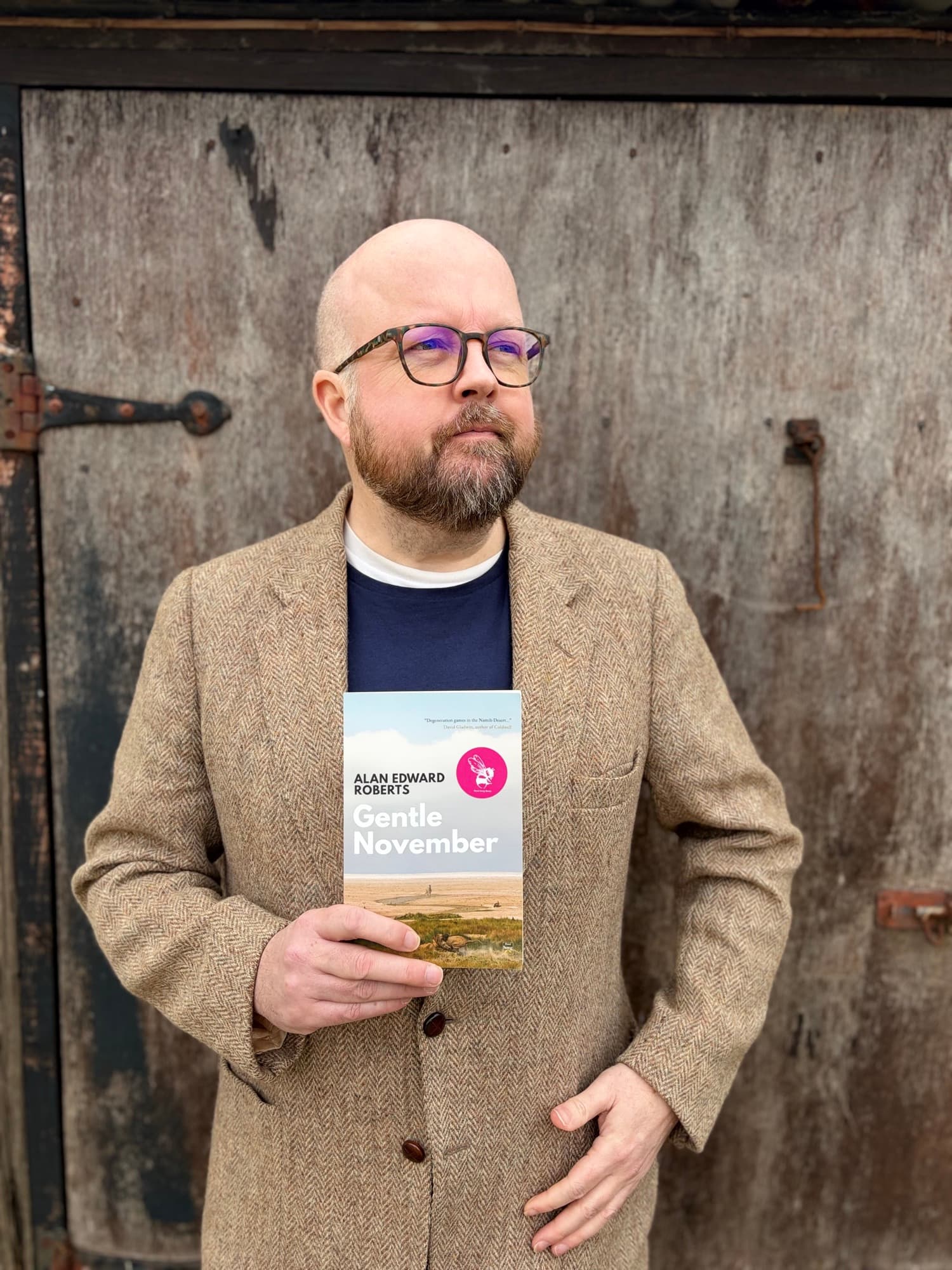
- VLWe met back in July 2025. You were a guest on a radio show that I present (10Radio). You mentioned that you were suffering from writer’s block. What happened between then and the publishing of your latest book, Gentle November? How did you overcome the block?
- AERI was writing a novella called Repeater and the whole process was rather laboured. Some aspects worked yet others fell apart. I’ve since read a novel that reminded of it, it had the same loose structure, a daisy chain of anecdotes which would seemingly up add to a whole, and I just had a hard time connecting with it. That particular book was Absence by Issa Quincey. So I abandoned Repeater.My intention was to release my own book for Road Song Books much later in the cycle, once I’d established the imprint somewhat, but a book I was working on with another writer (I still am) never came to fruition in time to follow up David’s book. I didn’t want there to be a six-month gap between Coldwell and the next release, and whilst I had announced a call-out for other writers to bring in their manuscripts, it would still take time to get a follow-up off the dock. Historically, I work extremely well to deadline and can be very creative under the gun. So, whilst preparing Repeater for completion, I realised on reading and re-reading it, that it didn’t complement David’s Coldwell at all. It was nowhere near as well-written or thought out. I wanted something short, sharp and memorable and with Repeater I had produced something that was turgid and in dire need of a long and painful series of edits. So, instead I wrote Gentle November. Its origins lay in a lone paragraph in a notebook. The beginnings of a story idea set in Namibia.
- VLI like that notion of the notebook, always at the ready just in case an idea floats into one’s head. I’ve never really done it, just read about it. Or if I did, they just ended up in the washing machine. Do you find them useful as idea dumps?
- AERVery much so. I use notebooks constantly and find them invaluable. The end result is nothing like the original scribble of an idea though but the primer was all I needed.So in effect, Gentle November came out of necessity but I’m completely certain that it’s my very best book. I’m very proud of how it turned out, especially given that it took three weeks to complete a first draft.
- VLDeadlines are good aren’t they? The time for inspirational panic to set in... It’s a great book! It’s dark, disturbing and chilling. The opposite of your own personality, I would say! What inspired you to dig down and create a piece of writing so human, and yet so bleak?
- AERThank you. I have always enjoyed human stories, whether that’s in a film, play or film. As a young man, I lived in the heart of London and I worked nights. I didn’t know anyone so I would spend much of my spare time watching arthouse films in all these wonderful long-dead West End cinemas. The films I liked best were the starker ones. The films with truthful, strong, relatable characters. I’ll never make a film, but writing these novels I get to play my own versions of those types of movies out on the page. I think my friends are rather surprised that I write dark tales, as I am a positive and cheery person in the main.
- VLThe country, Namibia, is totally present and vibrant in the book. The world and the space you describe is all-enveloping for the reader. Almost like another character in the book. Have you ever been there? I’m sure you must have.
- AERI was lucky enough to go on holiday to Namibia in October 2022, and from that trip, I always knew that I wanted to set a story set there. I have always loved deserts and am drawn to stories the unfold in such barren lonely places. Namibia is a wonderful country of wild extremes and its emptiness is haunting. There were a few occasions were we’d stop, leave our air-conditioned bus and step out on the roadside. Within minutes you wanted to be back inside. The land goes on forever, and you just know it’s hungry for your life. It’s like being on the moon, I imagine.
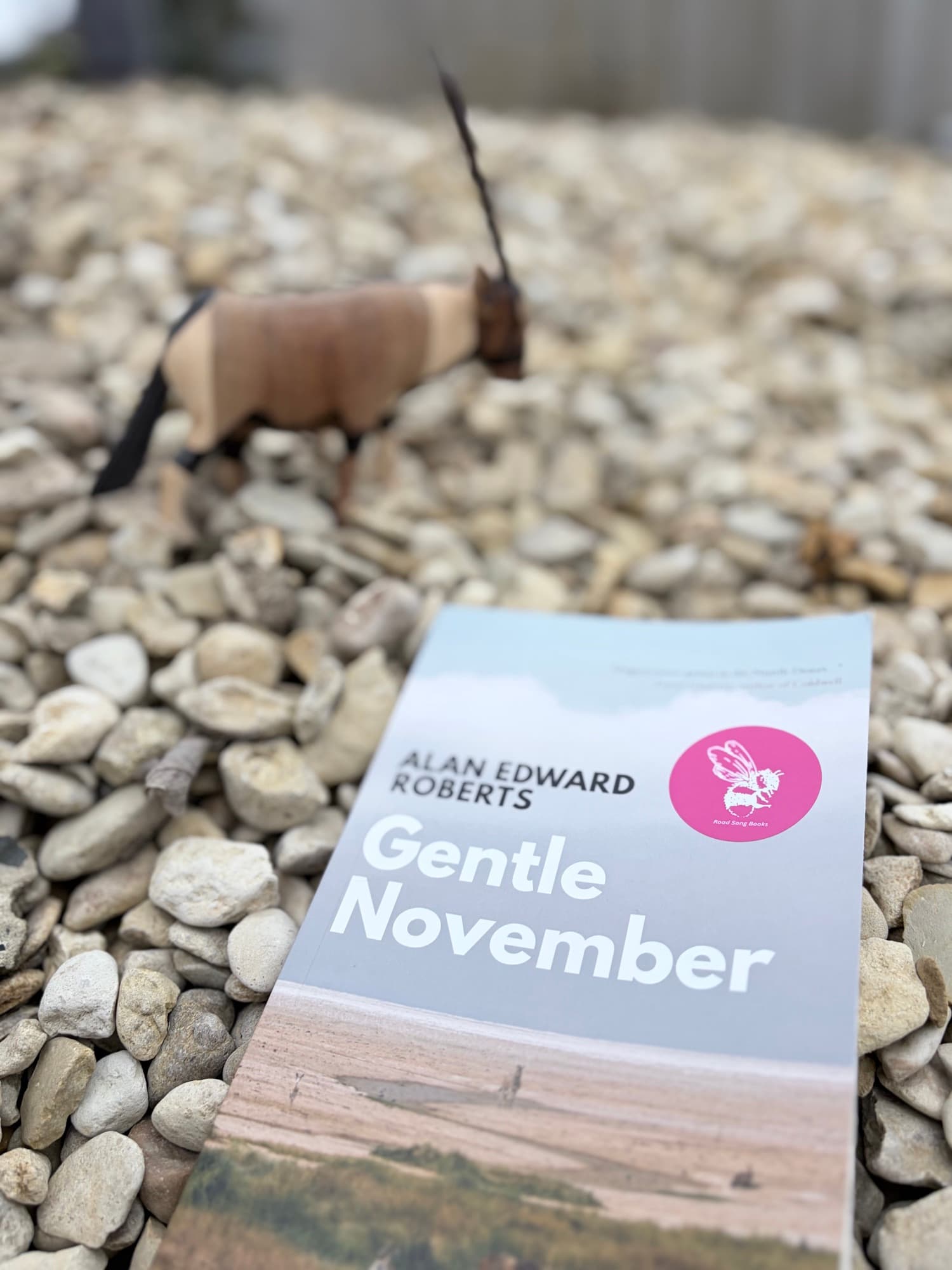
- VLYeah, there’s a legend where the moon is a repository for things that were wasted on Earth...like… misspent time and money, broken vows, fruitless tears, unfulfilled desires, stuff like that… I think your book reflects that. How much of a challenge was it to write from a female perspective?
- AERThe perspective is from an unseen (genderless?) observer’s point of view. So, there’s a detachment which made the whole thing a bit more practical. However, there were discussions with my editor, Matt Usher, about how the main woman’s actions may have differed if they were a man. There wasn’t much of a challenge because I eat, sleep and drink fictional stories. I pay attention to all kinds of characters, any genders, but I particularly enjoy new fiction by women writers, also female singer/songwriters and filmmakers. I want to qualify this by mooting that I am observant and understand what I see enough to craft believable fictional characters.
- VLI read the book when I was ill with a chest infection. I was on antibiotics, and some strong painkillers because every time I coughed it was like being kicked in the ribs by a donkey. The book is bit like a fever dream in my memory of it. It does have a dreamlike quality. It certainly infected my dreams. Was this intentional? I mean, not my dreams, but that quality. It was if a hot desert wind could blow the whole story into dust.
- AERAll I can say is that if the book chimed with you, then I wrote it for you. My intention and this is true for all my writing going back to The Magpie, is to evoke visuals in your head. The end game is to play you a movie inside your head, I’m a projectionist. If you can see the people, their scenes, the story’s setting, then I’m very happy. I’m a filmmaker after all.
- VLI reckon you should write a film script Ed! It would be amazing!
- AERThat is my ambition!